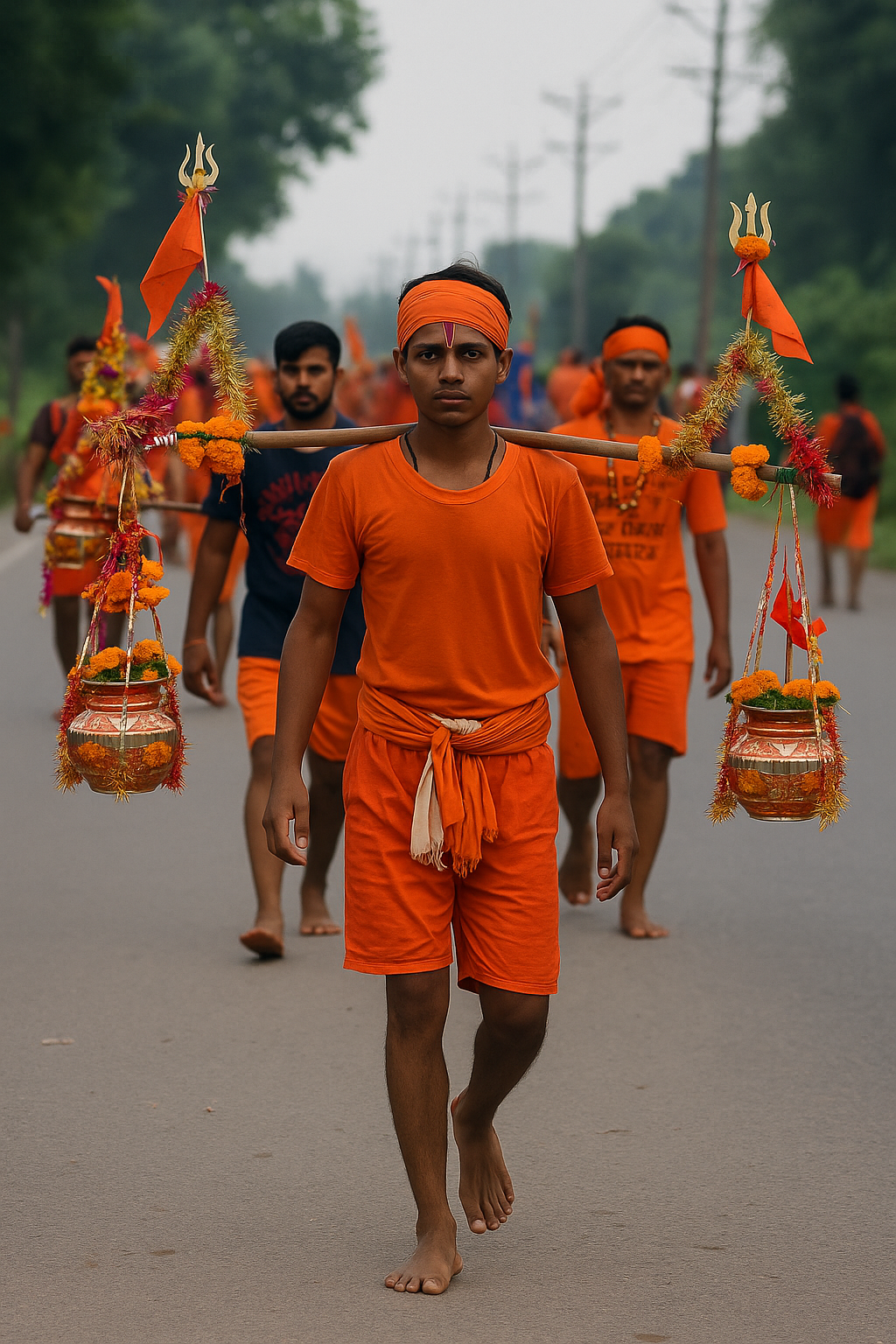
The Kanwar Yatra 2025 is one of India’s most awe-inspiring pilgrimages, where millions of devotees carry holy Gangajal to honor Lord Shiva during Shravan month. This article explores its deep-rooted history, sacred rituals, and key dates—including the grand culmination on Sawan Shivratri (July 23, 2025). From the chants of “Bol Bam” to the spiritual journey of Kanwariyas, uncover the devotion, traditions, and modern-day celebrations of this extraordinary Hindu pilgrimage. Dive in to experience the power of Shiva worship!
The Kanwar Yatra is one of the largest and most significant annual pilgrimages in India, dedicated to Lord Shiva. Millions of devotees, known as Kanwariyas, undertake this journey during the holy month of Shravan (Sawan) to collect sacred water from the Ganga River and offer it at Shiva temples, particularly at Kashi Vishwanath (Varanasi), Haridwar, Gangotri, Gaumukh, and Pura Mahadev.
In 2025, the Kanwar Yatra is expected to reach its peak on Sawan Shivratri (July 23, 2025), when most devotees will offer Gangajal to Lord Shiva. While the grand procession winds down by this date, the entire Shravan month (from July 10 to August 9, 2025) remains spiritually significant, with devotees continuing smaller rituals and pilgrimages.
History and Significance of Kanwar Yatra
The origins of the Kanwar Yatra can be traced back to ancient Hindu scriptures, particularly the legend of Samudra Manthan (the Churning of the Ocean). According to mythology, when poison (Halahala) emerged from the ocean, Lord Shiva drank it to save the universe. To reduce the poison’s effect, the Ganga water was poured on him, cooling his throat and turning it blue, earning him the name Neelkanth.
The Kanwar Yatra symbolises this act of devotion, where devotees carry Gangajal in pots (Kanwars) hung on bamboo poles, walking barefoot for miles to offer it at Shiva temples.
Rituals and Traditions
- Preparation & Austerity
- Kanwariyas observe strict vows, including celibacy, fasting, and abstaining from alcohol and non-vegetarian food.
- Many wear saffron clothes and chant “Bol Bam” or “Har Har Mahadev” throughout their journey.
- Collecting Gangajal
- Devotees travel to Haridwar, Gangotri, or Rishikesh to fetch holy water from the Ganga.
- The water is carried in decorated Kanwars without letting it touch the ground.
- Offering to Shiva Temples
- The final ritual involves pouring the Gangajal on Shiva Lingams at temples like Kashi Vishwanath, Pura Mahadev, or local shrines.
- Special abhishekams (ritual baths) and aartis are performed.
- Dhuni Puja & Community Feasts
- Many Kanwariyas organise Dhuni Puja (sacred fire rituals) and distribute prasad (blessed food).
Modern-Day Celebrations & Challenges
- Mass Pilgrimage: Millions participate, creating a sea of saffron-clad devotees.
- Security & Arrangements: Governments set up medical camps, free food stalls (langars), and traffic controls for safety.
- Environmental Concerns: Efforts are made to reduce plastic waste and maintain cleanliness.
Conclusion
The Kanwar Yatra is not just a pilgrimage but a test of faith, endurance, and devotion. In 2025, the peak on July 23 (Sawan Shivratri) will witness an extraordinary spiritual gathering, reaffirming the timeless bond between devotees and Lord Shiva. Whether through grand processions or silent prayers, the essence of the Yatra remains—unwavering devotion to the Destroyer and Protector of the Universe.